Chris Barry
Visit our faculty directory to find faculty members who are currently accepting graduate students.

Our research team, conducts studies dealing broadly with risk and protective factors related to child and adolescent behavioral problems. More specifically, we have focused on self-perception (e.g., narcissism, self-esteem) and callous-unemotional traits as they relate to various aspects of youth adjustment, particularly aggression and delinquency. Additional projects involve evidence-based assessment of child/adolescent conduct problems and the role of self-perception on social media behavior. The latter has included how individuals perceive narcissistic status updates from others and the association between narcissism and self-photography (i.e., “selfie”) posts on social media. Visit Youth Personality & Behavior Lab (*See disclaimer).
Tammy Barry

The Child Externalizing Behaviors Lab (*See disclaimer) conducts research on biologically-based and contextual correlates of child externalizing behaviors, including ADHD, aggression, and disruptive behaviors associated with autism. Factors examined in our research include neuropsychological functioning/endophenotypes, child temperament, parental psychopathology/stress, parenting practices, SES/neighborhood characteristics, and individual difference factors (e.g., narcissism and psychopathy), among other variables. Our research also focuses on the measurement and latent structure of externalizing behavior disorders, such as ADHD and oppositional defiant disorder.
Francis Benjamin

The Political Interaction Lab (*See disclaimer) focuses on the political engagement of individuals. Of particular interest is the motivation and interaction of individuals and their effect on the political process.
G. Leonard Burns

I am currently using latent variable modeling procedures (e.g., confirmatory factor analysis, structural regression analysis, latent growth analysis, item response theory) to study ADHD, Cognitive Disengagement Syndrome (Sluggish Cognitive Tempo), and ODD within and across countries. Visit Attention-deficit and Disruptive Behavior Disorders Research (*See disclaimer).
Elizabeth Canning

In the BOLD (Building Opportunities for Learning & Development; *See disclaimer) lab, we use experimental methods to understand the subtle interpersonal and organizational messages that perpetuate bias and inequality. We specifically focus on subtle messages about belonging, value, talent, and ability that are communicated by institutions, employers, instructors, and peers. We use social-psychological theory to design and implement field-based interventions that address important social inequalities, such as racial and social-class achievement gaps.
Carrie Cuttler
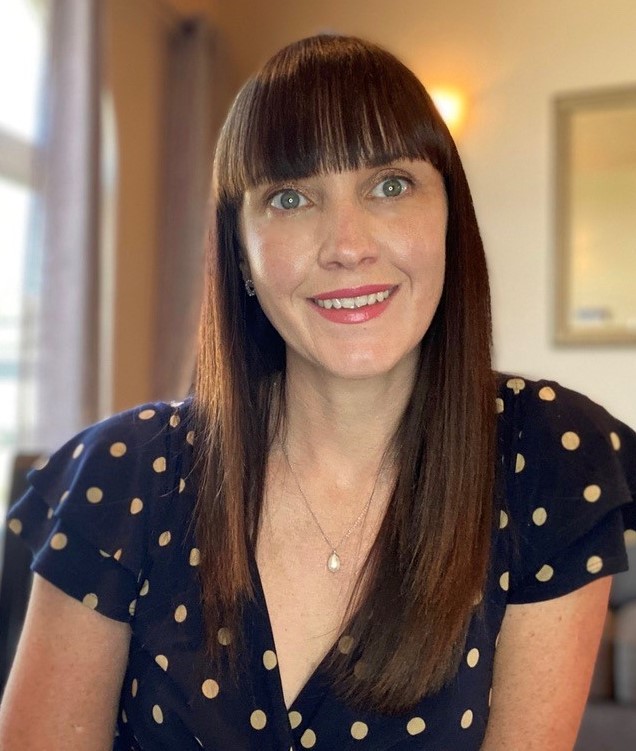
The Health & Cognition (THC) Lab (*See disclaimer) focuses on the links between health and cognition. I am currently focused on examining links between cannabis use and mental health (e.g., depression, anxiety, OCD) as well as the effects of chronic cannabis use and different forms of exercise on cognitive functioning. More specifically, my current research projects focus on examining i) the links between stress and cannabis use, iii) the perceived efficacy of different strains of cannabis on the treatment of anxiety, depression, stress, and other medical conditions, iii) the influence of cannabis use (early vs. late onset, concentrate use vs. marijuana use) on cognitive functioning, iv) the effects of different forms of exercise (aerobic, resistance, yoga) on cognitive functioning.
Jessica Fales

The Adolescent Health & Wellness Lab (*See disclaimer) conducts high quality research in the areas of pediatric pain, social development, and positive psychology. Our current research efforts are primarily focused on the identification of social risk and protective factors associated with the chronic pain experience in adolescence. The ultimate goal of our research is to prevent the development of chronic pain problems in otherwise healthy youth and to help develop more effective treatments for adolescents with pain and their families.
Lisa Fournier

Our laboratory is currently investigating how selective attention operates and how attention modulates visual perception and motor performance as well as how prioritization of actions and demands on working memory affect perception and our ability to quickly and accurately execute motor actions. Visit the Attention, Perception & Performance Lab (*See disclaimer).
Maria (Masha) Gartstein

The WSU Temperament Laboratory (*See disclaimer) has been functioning since 2002, conducting projects that are focused on the evaluation of temperament development in early childhood. Specifically, growth in temperament characteristics across infancy, relationships with parent-child interactions factors, and attachment, are currently being examined. Cross-cultural differences in the development of temperament are also being investigated, in collaboration with colleagues at the University of Murcia in Spain and the State Research Institute of Physiology, in Novosibirsk, Russia. Longitudinal evaluations, following children into the preschool period are currently being planned. For example, infant temperament predictors of early behavior problems and psychopathology will be examined.
Angela Henricks

Work in the Brain Alcohol Research (BAR) Lab (*See disclaimer) uses rodent models to better understand the neurobiology of substance use and mental illness. We use translational approaches to identify neural circuits associated with addiction-related behavior and development, often in the context of co-occurring mental illness. Since males and females demonstrate different vulnerabilities to psychological disorders (e.g., addiction, depression, psychosis), and females have historically been understudied in preclinical research, we are particularly focused on understanding the neurobiological underpinnings of these sex differences. Our ultimate goal is to enhance translation of preclinical findings to clinical populations, and contribute to the development of personalized, effective therapies for substance use disorder and mental illness in women and men.
Hsin-Ya Liao

In the Culture, Assessment, and Well-being Lab (*See disclaimer), we examine the role of culture and diversity on mental health service delivery and psychological wellbeing. We also examine the vocational interest structure and assessment across culture, advocating a greater use of the indigenous interest measures than the imported ones.
David Marcus

Much of our research on psychopathy has used Meehl’s taxometric method to examine whether psychopathy and related disorders (e.g., antisocial personality disorder, conduct disorder) exist along a continuum or are discrete, qualitatively distinct conditions. In other words, this research is interested in the question of whether there are “psychopaths” who are uniquely different from others or whether psychopathy is a dimensional construct. The Adult Psychopathology Lab (*See disclaimer) is currently examining the behavioral correlates of psychopathic personality traits, such as the association between psychopathy and risky sexual behavior. Additionally, our research on health anxiety has focused on how dysfunctional beliefs and a ruminative cognitive style contribute to health anxiety and hypochondriasis.
Kim Meidenbauer

Research in the Social, Cognitive, & Environmental Neuroscience (SCENe) Lab (*See disclaimer) examines how features of the physical and social environment affect individuals’ brains and their behavior. Currently, the lab’s work focuses on how heat exposure can lead to deleterious psychological outcomes and antisocial behaviors, and how greenspace interventions can be used to improve psychological well-being. Work in the lab is also focused on the creation and validation of research methods that allow us to “take the lab outside” via browser-based tasks, mobile neuroimaging (fNIRS), and experience sampling techniques. We also advocate for and prioritize the use of open science practices.
Michael Morgan

The analgesic effects of morphine and other opioids decrease with repeated administration. Our lab has shown that a brain structure known as the periaqueductal gray plays an important role in morphine analgesia and tolerance. Our current objective is to understand the neural mechanism within the periaqueductal gray that causes this change in morphine potency. These studies use in vitro electrophysiology and behavioral pharmacology to link molecular changes in cell signaling to behavior.
Donelle “Dee” C. Posey
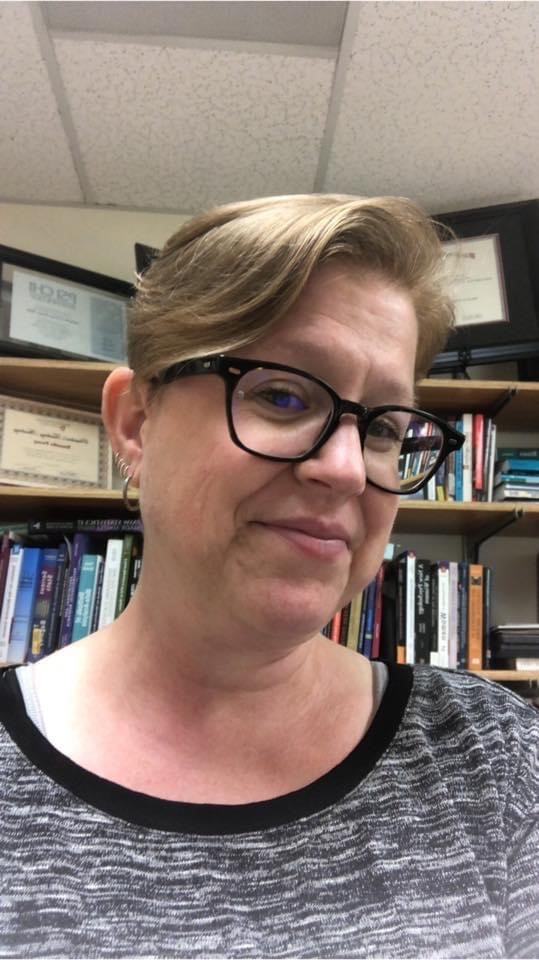
In my research, I focus on the effectiveness of instructional strategies and related student factors. My current interests include evaluating instructional strategies in Elementary Statistics in Psychology (Psych 311) as well as statistics anxiety. In my research and practice, I have two goals: one, to ease the anxiety that many students have coming into a statistics course, and two, to convey statistical concepts in a way that are relevant and interesting, and enduring. Visit Pedagogical Research Lab (*See disclaimer).
Tahira M. Probst

While I am fascinated by many different areas of industrial/organizational psychology, my research over the past 15 years has largely focused on issues related to employee health, well-being and safety. In particular, I am interested in the topics of economic stress and job insecurity; accident under-reporting; and organizational safety climate and safety leadership behaviors. In addition, many of my research studies attempt to delineate the extent to which our findings generalize to other cultural contexts and to identify sociocultural variables that may explain any observed differences. Visit Coalition for Healthy and Equitable Workplaces (*See disclaimer).
Maureen Schmitter-Edgecombe

Aging and Dementia Neuropsychology
The goal of this research program is to develop cognitive interventions that will help older individuals with progressive dementia (e.g., Alzheimer’s disease) delay functional disability and increase their quality-of-life. Participants in many of our studies are healthy older adults and early-stage dementia patients who complete standardized neuropsychological tests and cognitive experimental tasks that assess different cognitive skills (e.g., memory, problem-solving). We are currently investigating the relationship between memory deficits and everyday functional disabilities, and experimenting with a memory notebook and smart environment technologies to help persons with dementia compensate in their daily lives for declining memory. Visit Neuropsychology and Aging Laboratory (*See disclaimer).
Traumatic Brain Injury Neuropsychology Research Lab
Difficulties with memory, attention and complex problem-solving are common cognitive problems that can occur after someone experiences a traumatic brain injury (TBI). By bridging basic science research with rehabilitation techniques, our work is designed to help persons with TBI overcome cognitive difficulties. Participants in our studies complete standardized neuropsychological tests and cognitive experimental tasks that assess many different types of cognitive abilities. In conjunction with St. Luke’s Rehabilitation Institute in Spokane, we are currently investigating the recovery process of several important cognitive abilities (e.g., time perception, prospective memory, focused and divided attention, and metamemorial abilities) following a TBI.
Walt Scott

Broadly, I am in interested in basic personality structures and processes (e.g., temperament, self-beliefs/schemata, goals, etc.), how to measure them, and how to understand their contributions to personality functioning and to clinical depression. Visit the Personality, Psychopathology, and Assessment Lab (*See disclaimer).
Christine So

Research in the Laboratory for Understanding Nocturnal behaviors and Affect (LUNA) (*See disclaimer) broadly centers on how disrupted sleep acts as both precipitating and exacerbating factors of psychopathology, particularly in the context of trauma and stress. Currently, my line of research is focused on characterizing cognitive and affective processes underlying nightmares using multimodal methods (e.g., ecological momentary assessment, polysomnography, actigraphy, computerized tasks). Other lines of research to be pursued include use of ambulatory technology to identify sleep biomarkers of Alzheimer’s risk, environmental influences on sleep health disparities, and precision behavioral sleep medicine.
Alexander Spradlin

Founded in Spring 2025, the FOCUS Lab provides a dedicated space for undergraduate students to engage in research aligned with their interests, fostering academic and professional growth and a sense of purpose and belonging. Led by career-track faculty from Human Development and Psychology, members of the Lab use interdisciplinary collaboration to advance WSUV research in a dynamic and supportive environment. The FOCUS Lab also serves as a hub for professional development, networking, and community-based research, benefiting students, faculty, and the Pacific Northwest more broadly. With its emphasis on student-faculty engagement, the Lab provides undergraduate students with first-hand experience applying the toolset of science to understand complex phenomena.
Paul Strand

Our research is concerned with the emotional and social skills development of children from culturally and linguistically diverse backgrounds. We are currently investigating what information is useful to counselors and educators who seek to improve outcomes for children at-risk for school failure and for juvenile justice system involvement. Also of interest to us, particularly in our work with preschoolers, is how emotion knowledge and social values develop and impact school adjustment. Visit Emotion and Social Development Lab (*See disclaimer).
*Disclaimer: This link leads to an external website that is not hosted by the university. The views and content expressed are those of the faculty member and do not represent the official positions of the university.